

As towns and cities face increasing pressure from climate change, air pollution, and rising energy costs, expectations of the public realm are shifting. Sustainability is no longer a feature to be added at the end of a project. It is now expected to be embedded into how buildings and public spaces are designed, upgraded, and maintained.
This is where green infrastructure plays a critical role. Rather than treating nature and construction as separate disciplines, green infrastructure integrates living systems directly into the built environment. Living walls, wall gardens, and green wall systems are among the most effective ways to do this, particularly in dense urban areas where horizontal green space is limited.
Living wall systems allow nature to capitalise on unused vertical surfaces. A living green wall or living plant wall can be introduced onto façades, boundary structures, and interior walls without competing with essential land use. This makes living walls particularly suitable for public buildings, streetscapes, healthcare estates, transport hubs, and hospitality environments.
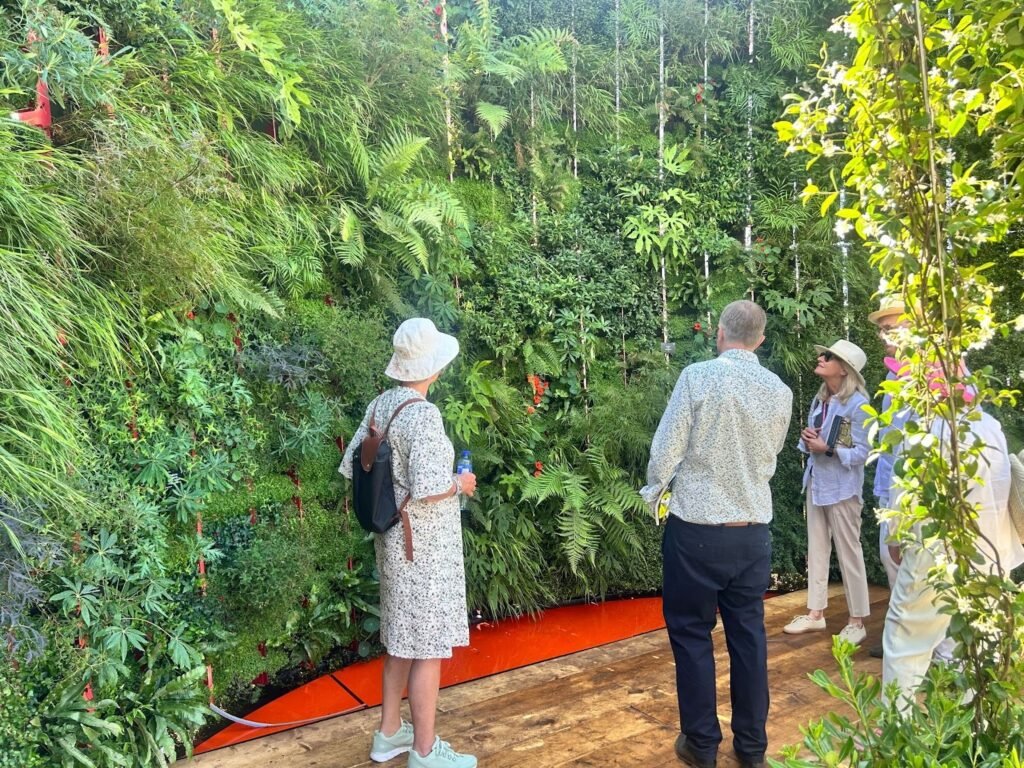
Both indoor and outdoor applications are increasingly relevant. Living walls, outdoor installations, soften hard façades, contribute to biodiversity, and help mitigate the urban heat island effect. An indoor living wall or living wall garden can transform sealed environments by improving air quality and creating calmer, more comfortable spaces for people to work, wait, or recover.
Benefits of Living Plant Walls
Air quality improvement remains one of the most documented benefits of living plant walls. Vegetation absorbs particulate matter and releases oxygen through photosynthesis, helping reduce exposure to pollutants in congested urban settings. In the context of the UK’s ongoing air quality challenges, living wall outdoor UK solutions can play a supporting role in wider public health and environmental strategies (Warsaw University of Science and Technology).
Health benefits extend beyond physical outcomes. There is strong evidence linking access to greenery with improved mental wellbeing. In environments such as hospitals, schools, and civic buildings, living walls can help reduce stress and create more restorative settings. Where traditional green space is unavailable, vertical solutions offer a practical alternative.
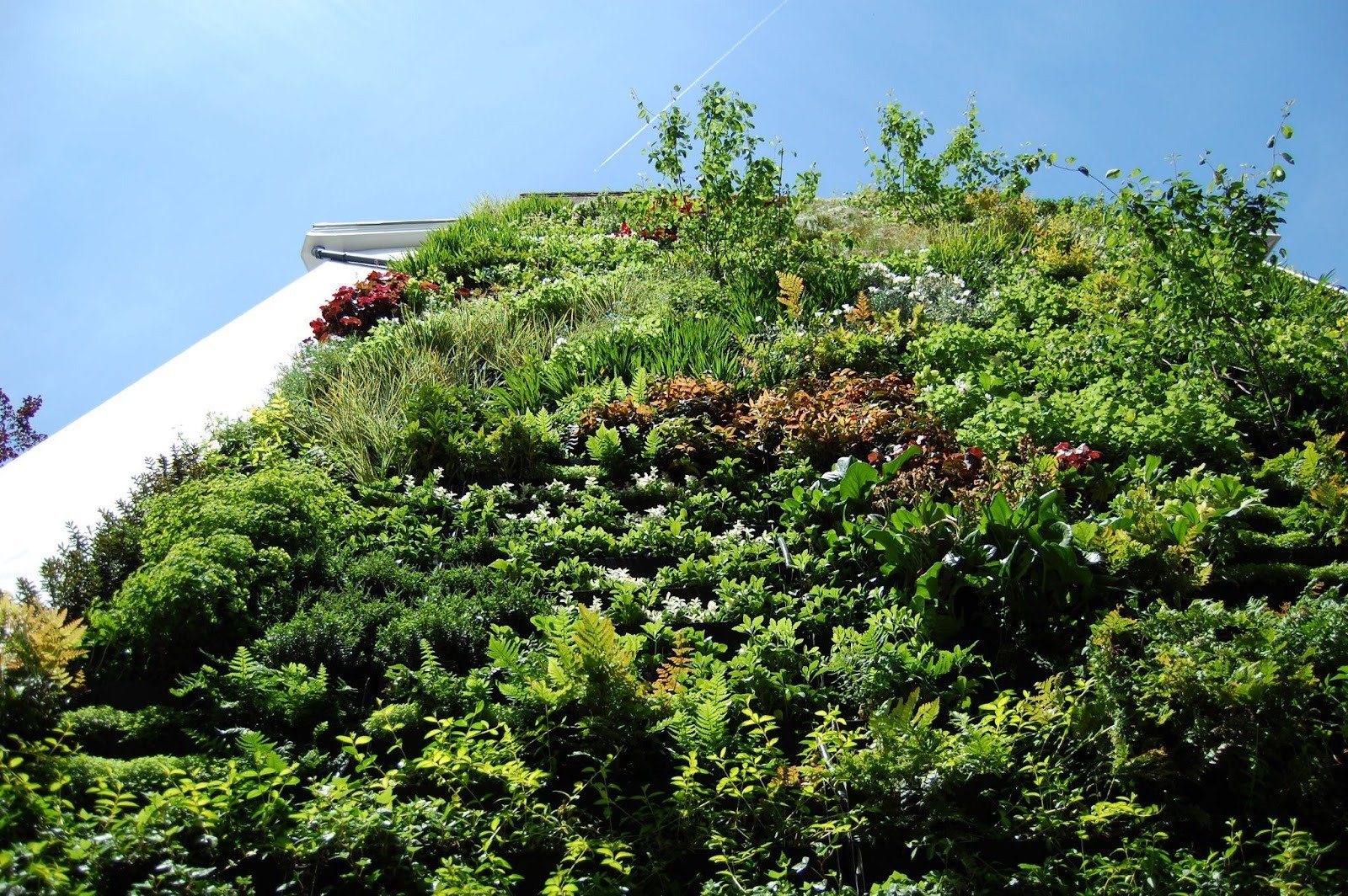
Public-facing facade
Green Walls support Biodiversity
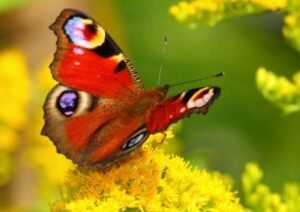
Living walls also support biodiversity by providing habitat for insects and pollinators. Recent peer-reviewed research from the University of Plymouth monitored living walls across multiple urban locations and recorded hundreds of individual organisms, including 12 species of pollinators, 19 types of soil invertebrates, and 12 species of spiders. The study also observed 32 bird species, with house sparrows, blackbirds, and robins nesting directly within the living walls themselves.
Importantly, the research found that soil-based living wall systems attracted significantly more wildlife than systems using artificial substrates, and that plant selection played a critical role. Species such as ivy, honeysuckle, and Mexican daisy supported the highest levels of pollinator activity, highlighting the importance of thoughtful design rather than purely aesthetic planting.
Contribute to Asset Performance
Aesthetic and social value should not be underestimated. Living walls and wall gardens can improve the visual quality of public spaces, encourage community pride, and deter graffiti by removing blank surfaces. Well-designed living plant wall systems become part of a place’s identity rather than an applied feaAt Life on Walls, we approach walls as part of a broader green infrastructure strategy. Our focus is on circular ecology garden concepts, living wall systems, and green wall systems that are designed to perform over time, indoors and outdoors, and that integrate seamlessly with existing structures.
For more information on how you can upgrade your asset with nature