
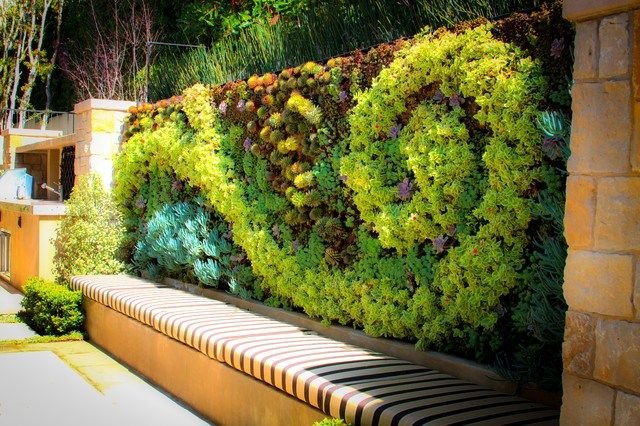
Designing a living wall is not simply a planting exercise, it is a strategic design decision that sits at the intersection of architecture, horticulture, and long-term performance. While every project is unique, high-performing vertical gardens are consistently underpinned by three core principles: purpose, aspect, and scale.
Getting these right from the outset is what separates installations that thrive for years from those that fail within a short lifecycle.
Purpose: Defining the Role of Your Living Wall
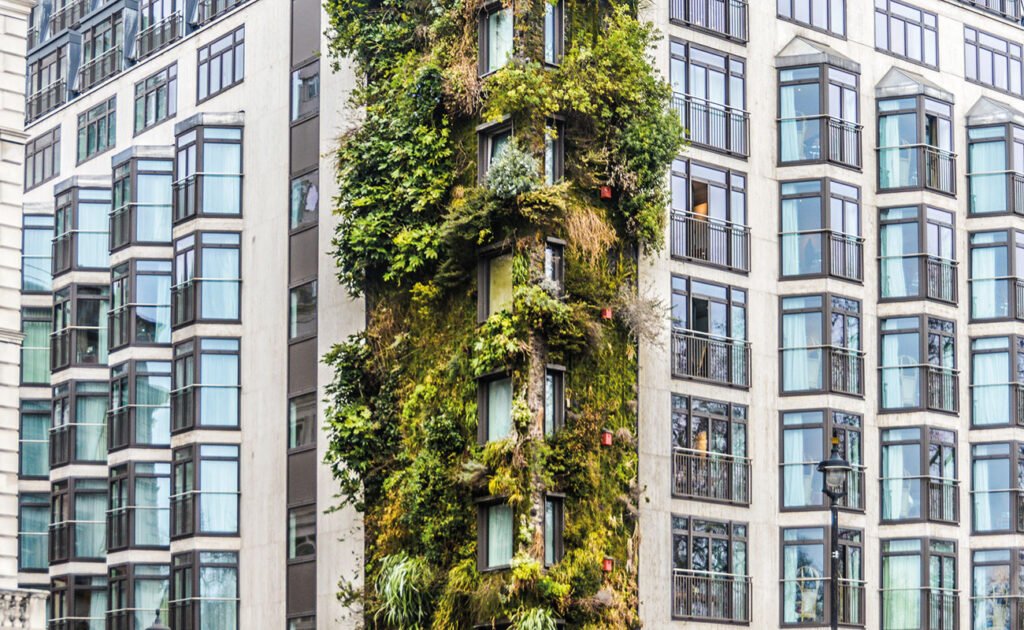
A living wall must be designed with intent. Is it purely decorative, or does it serve a functional role such as growing edible plants, improving air quality, or enhancing biodiversity?
Clarity at this stage informs every downstream decision, from system selection through to irrigation and plant palette. A decorative wall may prioritise texture, colour, and seasonal variation, whereas a productive wall requires a far more technical approach to access, maintenance, and plant rotation.
For high-end residential or architectural projects, purpose increasingly aligns with asset enhancement, wellbeing, and long-term value creation rather than short-term visual impact.
Aspect: Working with Orientation and Light
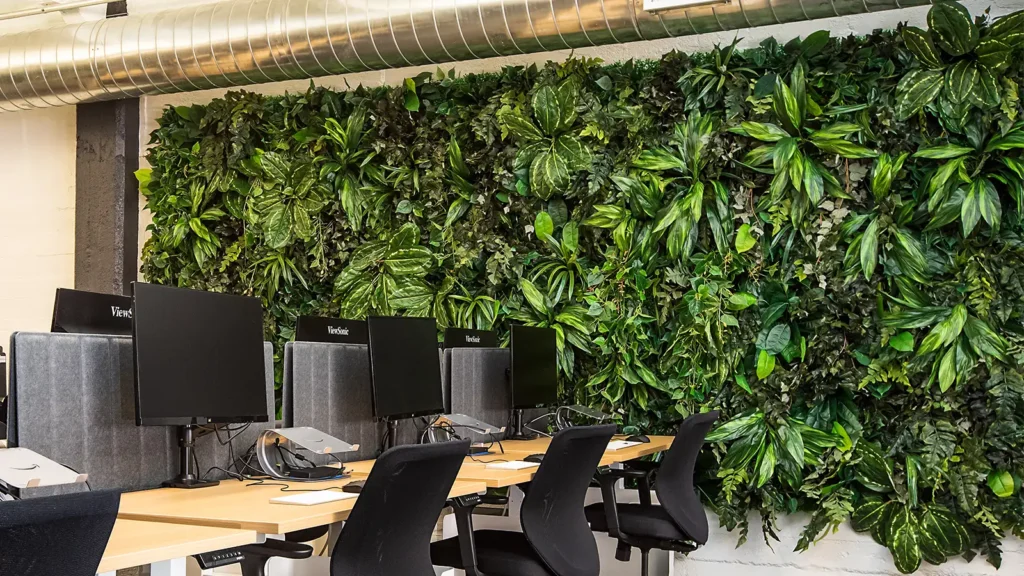
Aspect, or the orientation of the wall, is one of the most influential factors in determining plant success. A north-facing wall will typically receive less direct sunlight, favouring shade-tolerant species, while a south-facing installation opens up opportunities for sun-loving plants.
However, orientation alone does not tell the full story. Surrounding structures can cast shadows or reflect light, creating highly localised conditions that must be factored into the design.
Microclimates also emerge within the wall itself. Certain plants may dominate and create shaded pockets, allowing more delicate or shade-loving species to thrive in otherwise exposed environments. When leveraged correctly, this layering effect can significantly increase biodiversity and visual richness.
From a design perspective, aspect should be seen not as a constraint, but as a framework that refines plant selection and enables a more resilient, site-specific outcome.
Scale: Achieving Visual Balance and Impact
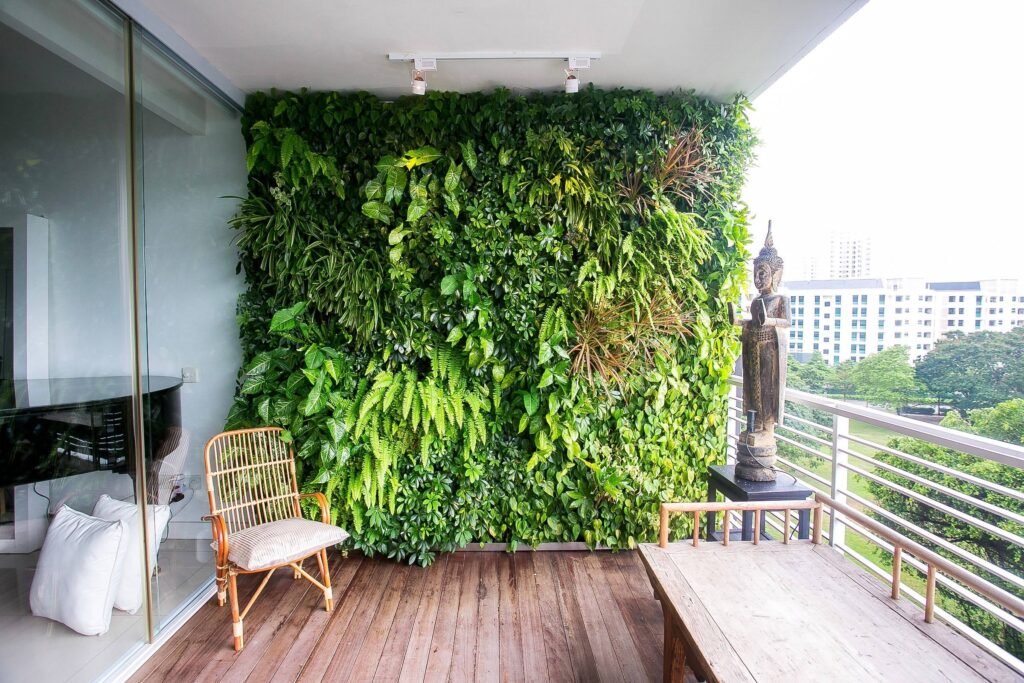
Scale is often underestimated, yet it is critical to both the aesthetic success and technical performance of a living wall.
The size of the wall should be proportionate to its surroundings, ensuring it enhances rather than overwhelms the space. Equally, plant density must be carefully calibrated. Overcrowding can lead to competition and maintenance challenges, while overly sparse planting diminishes visual impact.
Plant selection also plays a role here. Species must be chosen not only for their suitability to the environment, but for how they interact visually at scale, contributing to a cohesive composition rather than competing for attention.
When executed well, a living wall becomes a defining architectural feature, anchoring the space and elevating the overall design language.
Technical Foundations: Designing for Longevity
Beyond the visible design, successful living walls are built on robust technical planning.
Before moving into planting design, it is essential to address structural and operational considerations, including load-bearing capacity, waterproofing, access to power and water, drainage, and lighting. These elements are non-negotiable in ensuring long-term performance and minimising future maintenance risk.
Only once these foundations are in place should the creative layer begin. At this stage, plant selection, colour palettes, and overall composition can be developed with confidence, aligned to both the environmental conditions and the project’s strategic intent.
Designing Living Walls That Last
The difference between a short-lived installation and a thriving vertical landscape lies in the integration of design, engineering, and ongoing care.
By aligning purpose, aspect, and scale with robust technical planning, living walls can move beyond decorative features to become high-performing, enduring elements of a space.
Ready to Go Deeper?
If you are looking to move from inspiration to execution, our course “How to Design and Build Living Walls” provides a comprehensive, practical framework covering design, costing, installation, irrigation, and maintenance.
Whether you are a homeowner, designer, or industry professional, it is designed to equip you with the knowledge to deliver living walls that truly perform.
Register your interest today and be the first to access the course.