
01 — In short
Living walls don’t have to be thirsty.
In The Landscaper (Issue 291, Nov/Dec 2026, pages 18–19), Anja Spice asks how living walls can stay green as England faces hotter, drier summers. The answer from Life on Walls: water use is set by design, not by planting vertically. Larger rootzones, targeted drip irrigation, the right plants and captured rainwater make the difference.
- Reliable irrigation is the main factor in whether any living wall succeeds or fails.
- Bigger rootzones hold more moisture, so plants last longer between irrigation cycles.
- More plants is not always better: overcrowding increases competition for water.
- Rainwater can be the primary supply, with automated irrigation as backup.
02 — Key figures
- 2.5–9
- litres per m² per day: average water use measured across 16 outdoor living walls
- ~20 yrs
- Armando Raish’s experience designing and maintaining living walls
- 110 m²
- of rain-fed living wall at Middlesex University’s Ritterman Building
- 3,500
- plants installed in 2017 across four corners of the science building
03 — What the article covers
Water is now a design constraint.
The feature opens with a problem landscape professionals now face. The Environment Agency warns that less water will be reliably available as climate change brings hotter, drier summers and warmer, wetter winters. Can we keep greening buildings without creating landscapes that need ever more irrigation?
Living walls are sometimes criticised for the water they use, but the article shows the picture is more nuanced. Research into 16 outdoor living walls recorded average consumption of 2.5 to 9 l/m²/day, comparable with other green infrastructure. Demand varied with the system, orientation, solar exposure, planting density and species selection. How a wall is designed matters more than the fact that it is vertical.
Designing for a changing climate
After almost two decades in the industry, Armando Raish has seen irrigation move from a technical detail to a central design question.
“Reliable irrigation is the primary driver for success or failure of every living wall, regardless of the system or its age. But climate resilience needs to play a much bigger role.”
His view is that the industry must move away from high water-consumption systems towards larger rootzones that retain more moisture. Systems with restricted root space dry out faster and need frequent watering. He also challenges the idea that more plants make a better wall: very dense planting gives instant coverage but increases competition for water and maintenance. The goal is a balanced planting matrix, with species grouped by compatible water needs.
Efficiency over simple irrigation
Modern living walls still need dependable irrigation. Life on Walls typically uses automated drip irrigation that delivers controlled amounts of water directly to the planting zones at set intervals, with schedules adjusted for exposure, season and planting. The key distinction is between watering plants and wasting water. Overwatering causes root rot, fungal problems and unnecessary run-off, and washes nutrients out of the growing medium. Using only the water the plants need saves both water and feed.
04 — Case study
A vertical rain garden at Middlesex University.
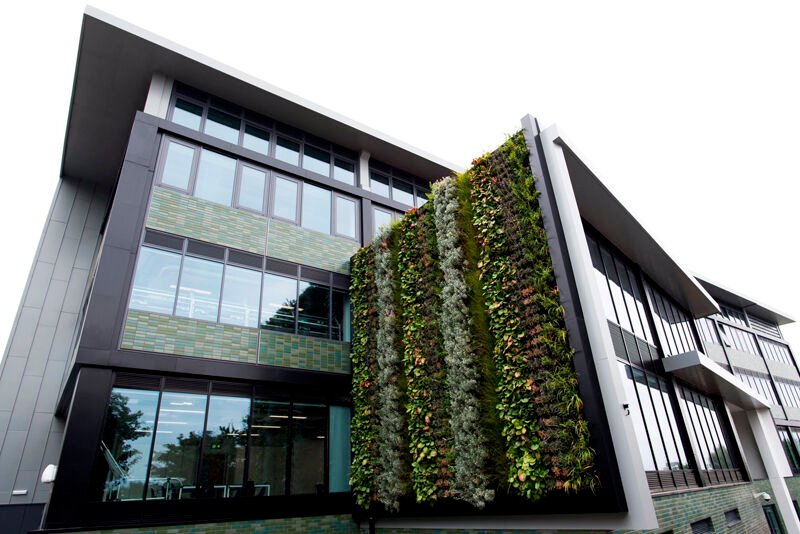
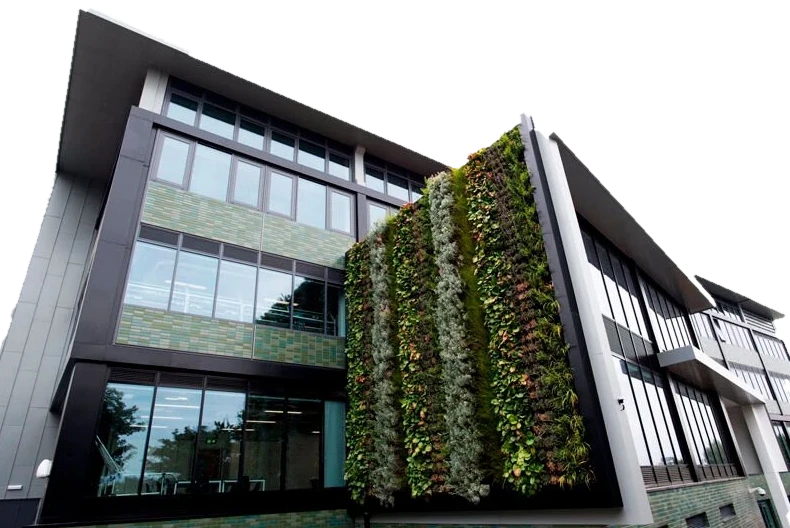
The article highlights the living wall Life on Walls installed at the Ritterman Building, Middlesex University’s science building, in 2017. Around 110 m² of living wall with 3,500 plants wraps four corners of the building and was designed to save, store and recycle rainwater.
Excess roof water is captured in concealed reservoirs behind the panels. Moisture wicks naturally into the planting cells with no pumps or power. A supplementary automated irrigation system runs for a few minutes each week to top up areas that receive too little rain. Rainfall is the primary resource; mechanical irrigation provides resilience when nature cannot.
If designing the wall today, Armando says he would go further by specifying more drought-tolerant plants with lower water dependency, as longer dry spells and hotter days change how walls designed around historical weather perform.
05 — Practical guidance
Five tips for a waterwise living wall.
- 01Automate irrigationDeliver water consistently and directly to the rootzone with drip irrigation on a controlled schedule.
- 02Make it reliableSecure a dependable water supply and add alerts or remote monitoring so failures are spotted quickly.
- 03Choose the right plantsMatch species to orientation, sunlight, temperature and the water that will realistically be available.
- 04Use a free-draining substrateGood drainage prevents waterlogging, root rot and fungal problems.
- 05Group plants by water needAvoid mixing drought-loving and moisture-loving species on the same irrigation zone.
Adapted from the tips panel in The Landscaper, Issue 291. References cited by the magazine: GOV.UK, ScienceDirect. Need help applying these? Read about our living wall design and maintenance services.
06 — Read the full feature
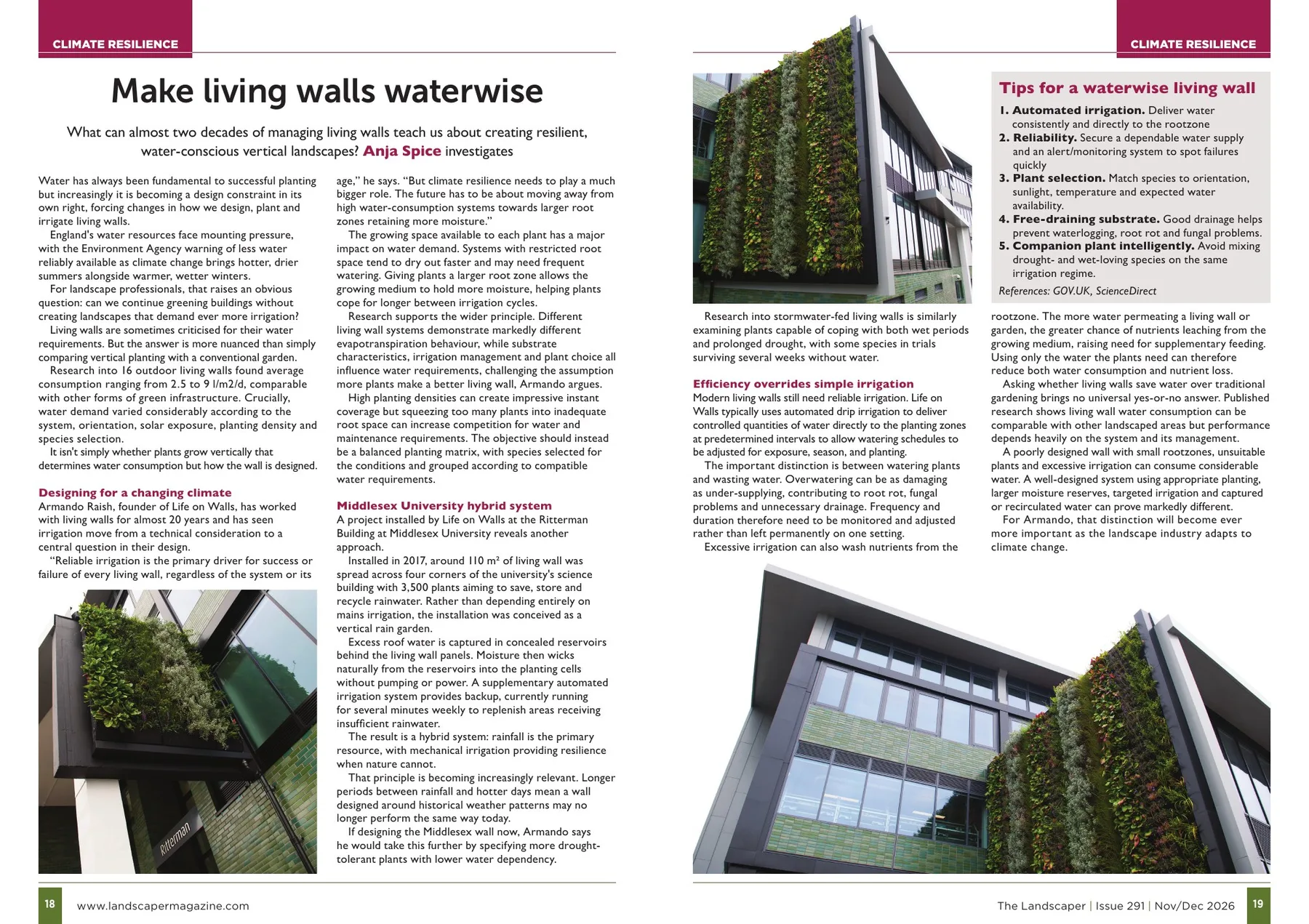
The article as printed.
07 — FAQ
Living walls and water: common questions.
Do living walls use a lot of water?
Not necessarily. Research into 16 outdoor living walls, cited in The Landscaper, found average consumption of 2.5 to 9 litres per square metre per day, comparable with other forms of green infrastructure. Actual demand depends on the system, orientation, sun exposure, planting density and species choice.
How can you make a living wall more water-efficient?
Give plants larger rootzones that hold more moisture, use automated drip irrigation that delivers water straight to the rootzone, choose plants that suit the wall’s orientation and the water available, use a free-draining substrate, and group species with similar water needs on the same irrigation zone.
Can a living wall be watered with rainwater?
Yes. At the Ritterman Building at Middlesex University, Life on Walls installed around 110 m² of living wall in 2017 that captures excess roof water in concealed reservoirs behind the panels. Moisture wicks into the planting cells without pumps or power, and an automated irrigation system runs for a few minutes a week as backup.
Why is overwatering a problem for living walls?
Overwatering wastes water and can be as damaging as underwatering. It contributes to root rot, fungal problems and unnecessary drainage, and it washes nutrients out of the growing medium, which increases the need for supplementary feeding. Irrigation frequency and duration should be monitored and adjusted through the seasons.
Who is Armando Raish?
Armando Raish is the founder of Life on Walls, a London-based living wall design, installation, supply and maintenance company. He has worked with living walls for almost 20 years and was interviewed by Anja Spice for The Landscaper’s Nov/Dec 2026 climate resilience feature.
— Next step
Planning a living wall that lasts?
We design, install, supply and maintain living walls across the UK and Europe, with irrigation and planting specified for the site and a changing climate.