
In short
To care for a living wall in winter, check it before reacting. Outdoors, reduce irrigation as growth slows, protect exposed pipework and timers from frost, and clear drainage. Indoors, check that lighting still covers the wall, watch humidity near heating vents, and adjust watering and feeding to how actively the plants are growing.
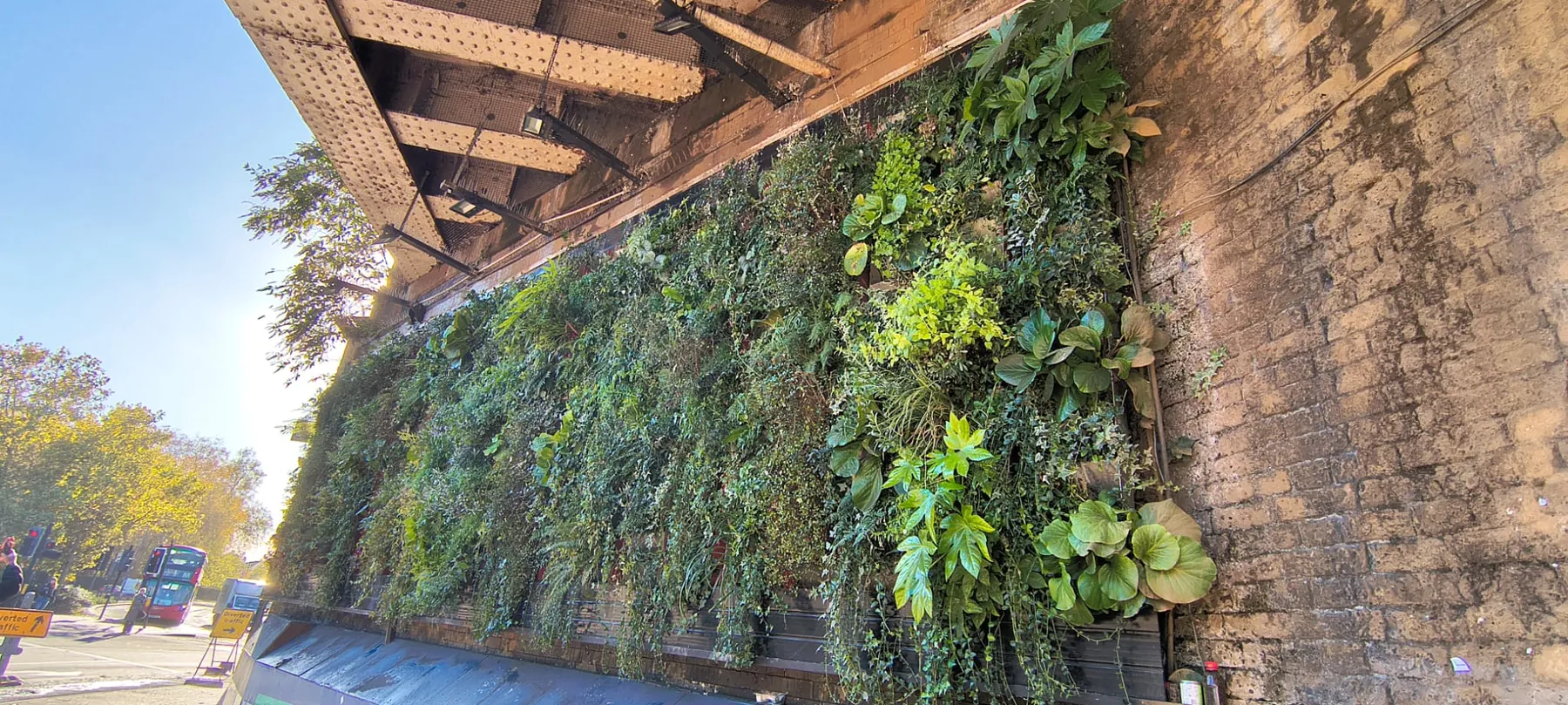
Winter brings changing conditions that affect how living walls grow and the care they need. Outdoors, cooler temperatures can slow plant growth and reduce water demand, while frost may pose a risk to exposed irrigation systems. Indoors, shorter daylight hours and dry air from heating can affect plant health, even when temperatures remain comfortable.
Whether indoors or outdoors, effective winter maintenance starts with understanding the conditions of your living wall. Regularly checking foliage, moisture levels in the growing medium, and irrigation and drainage systems can help identify potential issues early. For outdoor walls, pay particular attention to frost and exposure, while indoor installations may require adjustments to lighting and airflow. By observing how your living wall responds to seasonal changes, you can make small, targeted adjustments that help keep it healthy throughout winter.
01 — Outdoor
Outdoor living walls
Choose plants for the wall’s microclimate
At Life on Walls, we generally aim for 90-95% evergreen planting in suitable outdoor designs to retain foliage through winter. Hardiness is a separate consideration. A sheltered courtyard and an exposed façade can call for different planting, even on the same site. When choosing plants, consider local minimum temperatures, wind exposure, shade, and how much rain actually reaches the wall.
These plants offer different textures, colours, and forms, depending on the conditions:
- Euonymus japonicus ‘Microphyllus Albovariegatus’ is a compact evergreen shrub with small, dark green leaves edged in creamy white. It suits full sun or partial shade.
- Fatsia japonica brings large, glossy, deeply lobed leaves to sheltered planting schemes. Its spreading habit makes it a good choice where the design can accommodate its mature size.
- Asplenium scolopendrium, or hart’s tongue fern, has arching, strap-shaped evergreen fronds that bring texture to sheltered, shady areas.
- Carex elata ‘Aurea’ adds movement and contrast with its arching, golden-yellow foliage. Consider it for parts of the wall where the growing medium stays reliably moist.
- Erysimum ‘Bowles’s Mauve’ brings upright clusters of mauve flowers and narrow, grey-green foliage. It suits a sunny, free-draining position and adds colour during its flowering season.
Adjust irrigation to the weather
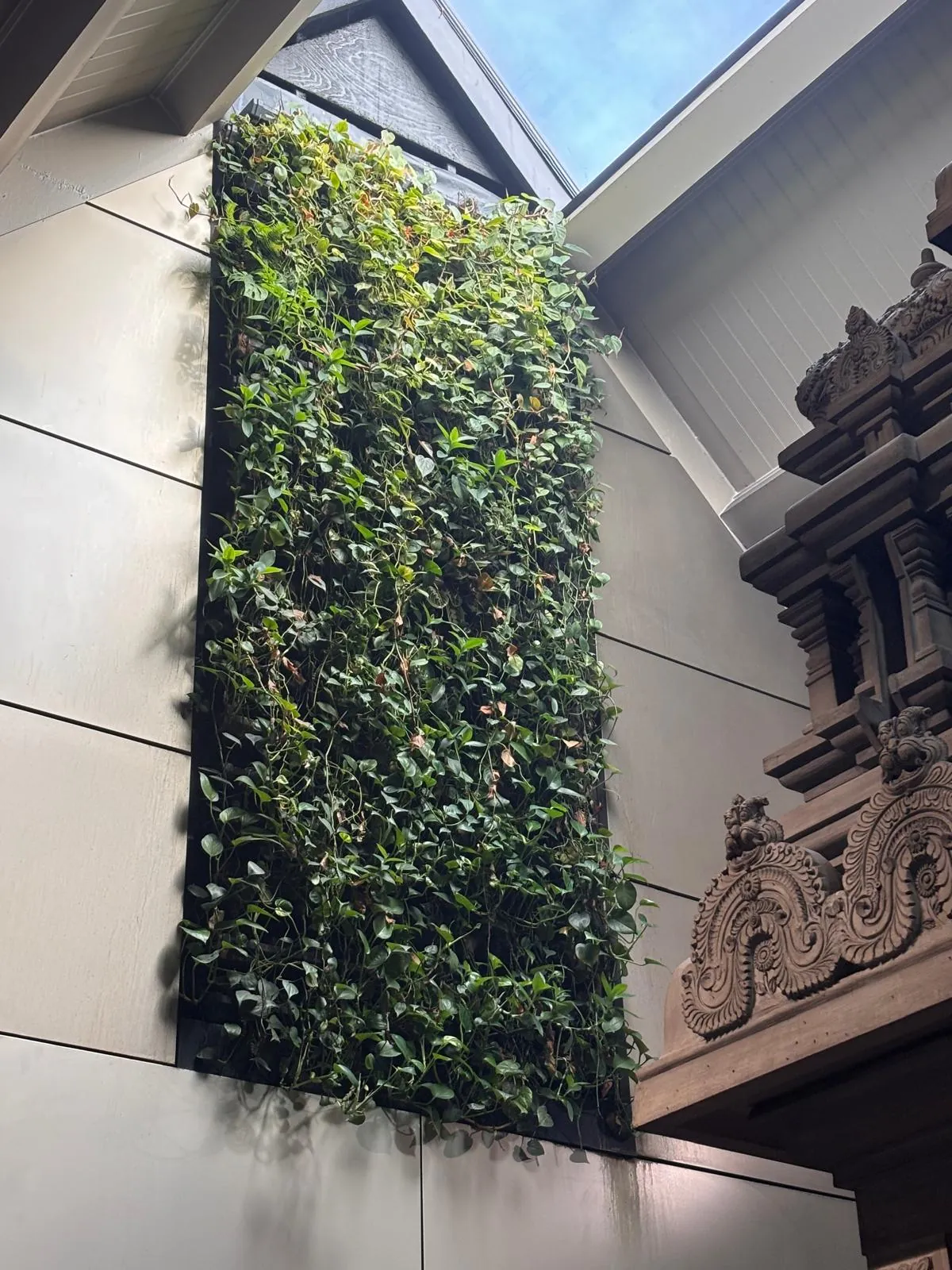
As temperatures drop and growth slows, an outdoor wall will often need less water. Check the growing medium in several places before reducing irrigation. An upper section exposed to wind may dry faster than the planting below, and a wall beneath an overhang can stay surprisingly dry during a wet spell.
Adjust the frequency and duration of watering to suit the wall. Use the plants, recent weather, and moisture readings or checks to guide the schedule. Revisit the settings after sustained rain, a dry spell, or a significant change in temperature. Our article on waterwise living walls covers irrigation design in more depth.
Protect exposed irrigation before frost
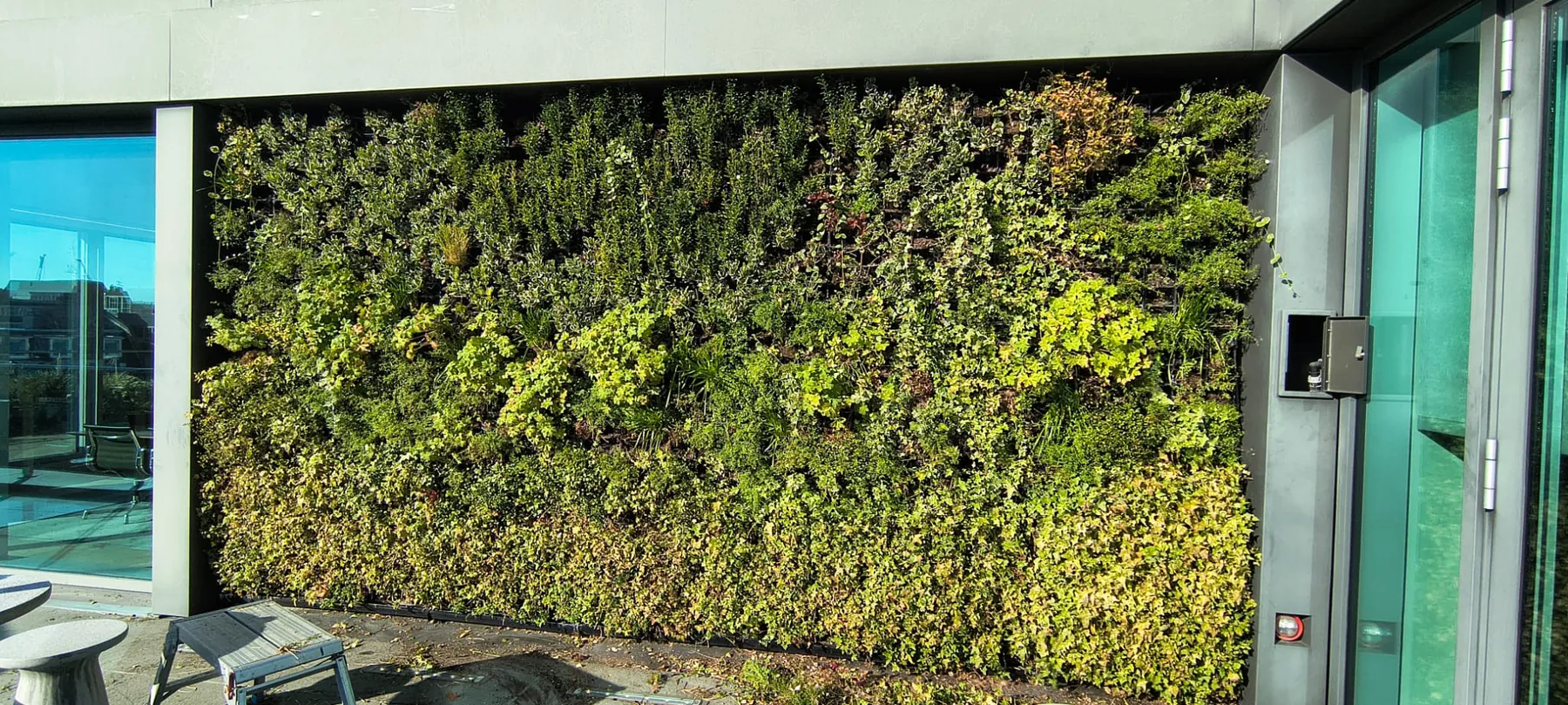
Inspect outdoor taps, pipework, valves, connectors, and timers before the first freeze. Water can expand as it freezes and damages vulnerable components. Insulation can reduce exposure, and some systems also require vulnerable sections to be drained or winterised. Follow the instructions for the installed system, and check for leaks or damage after a cold spell.
Prune selectively and keep drainage clear
A pre-winter visit is a good time to remove dead or damaged material, clear debris from drainage points, and check for loose planting. Trim excessive growth where it is likely to catch the wind or overhang neighbouring plants. Cut back herbaceous perennials only where the timing suits the species, and use a lighter touch with evergreen shrubs and ferns. A follow-up check after storms or freezing weather can catch loose plants, blocked drainage, or irrigation problems early.
02 — Indoor
Indoor living walls
Check light and humidity when the heating comes on
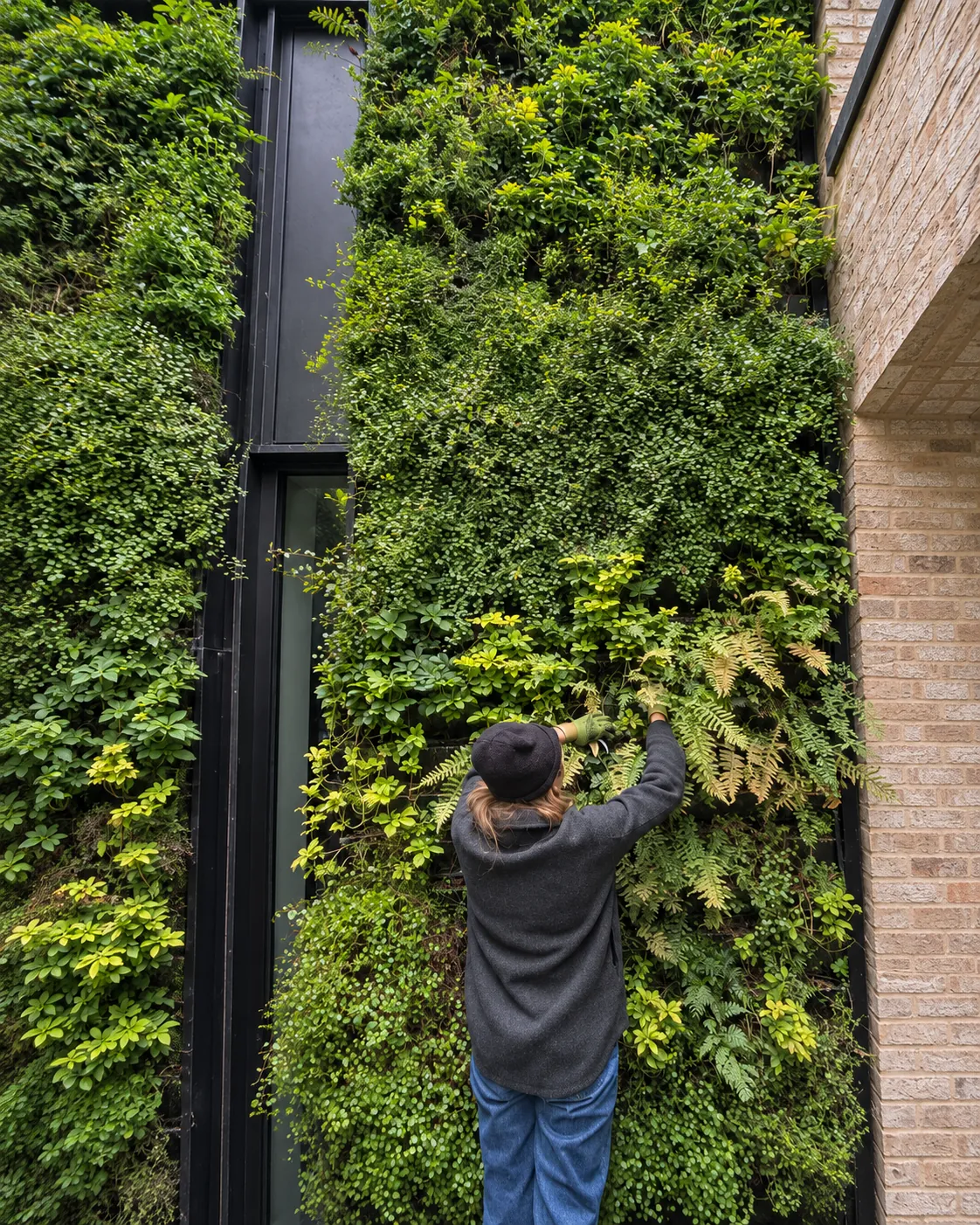
Shorter days can reduce the light reaching an indoor wall, particularly in areas that rely on daylight. Check whether existing grow lights still cover the full planting area, and review their timing if needed. Heating and ventilation can also create dry spots, particularly near vents. Check humidity close to the wall, where the plants experience it.
Brown or crispy leaf tips can be a sign of dry air, particularly when indoor heating is on, but they can also have other causes. Before increasing irrigation, check the moisture levels in the growing medium. If the growing medium is already sufficiently moist, consider lightly misting the affected foliage once a week to help counteract dry indoor air. Also, ensure plants are not exposed to direct heat from radiators or heating vents.
Water and feed according to plant growth
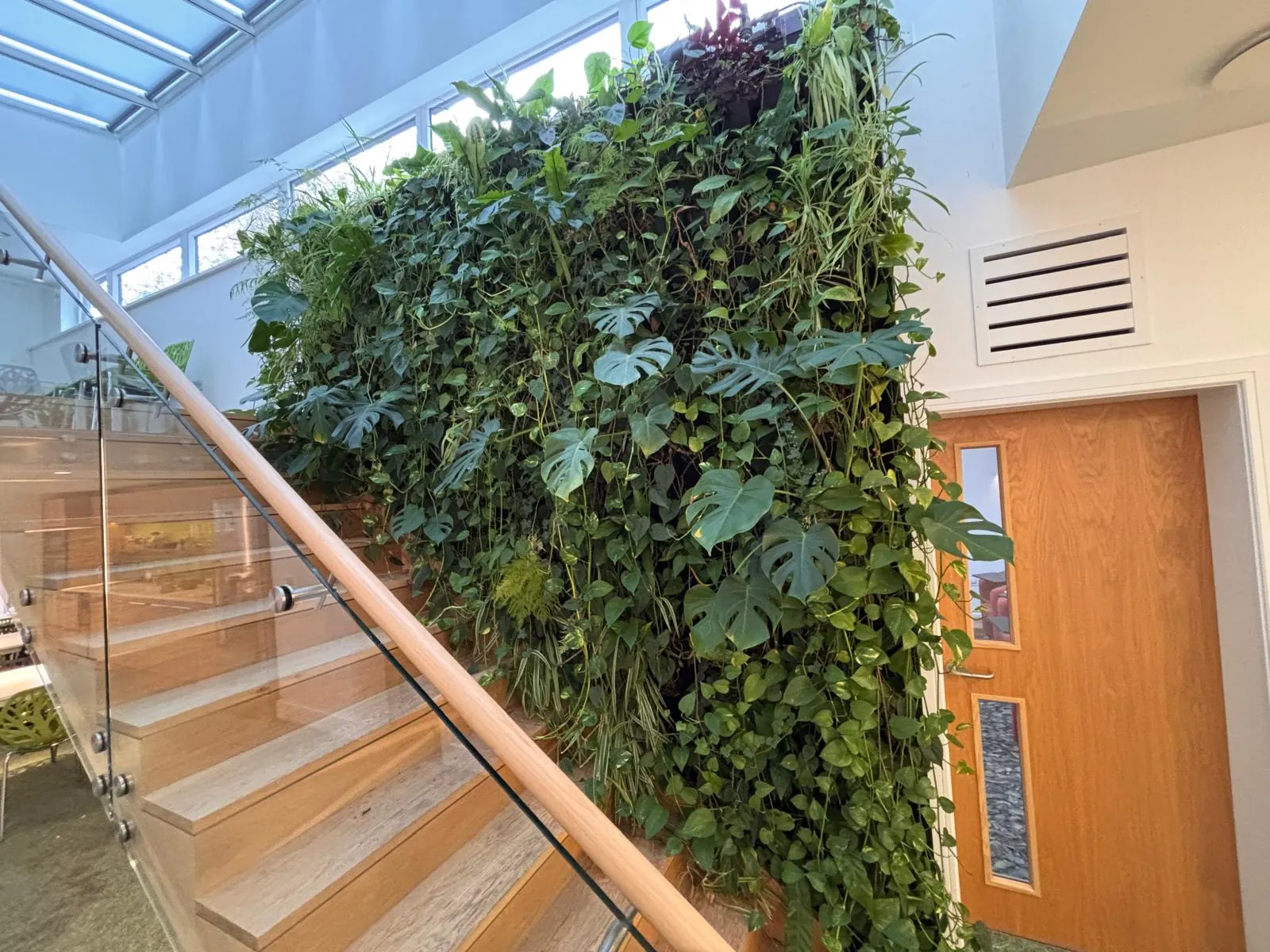
An indoor wall in a warm, consistently lit space may continue growing through winter. A wall that relies on natural daylight may slow down and use less water. Check moisture at several heights, review how actively the plants are growing, and use those observations to adjust watering and feeding. Pay particular attention to ferns near vents and to lower sections that may stay damp for longer. For design advice, see how to design a long-lasting internal living wall.
Match indoor plants to light and humidity
- Spathiphyllum ‘Alana’, or peace lily, combines glossy green foliage with white spathes and suits bright, filtered or indirect light.
- Heartleaf philodendron, often sold as Philodendron scandens, has trailing stems and glossy, heart-shaped leaves that soften the edges of a wall. It suits bright, indirect light.
- Scindapsus pictus, or satin pothos, adds silver markings and a trailing habit. Bright, indirect light helps show off its leaf pattern.
- Aglaonema ‘Maria’, or Chinese evergreen, has compact growth and mint-green markings, making it an option for more shaded parts of an indoor scheme.
- Asplenium nidus, or bird’s nest fern, adds structure with its upright rosette of broad, wavy fronds. Give it indirect light and a position away from drying airflow.
- Adiantum raddianum, or maidenhair fern, brings fine-textured foliage to sheltered, humid areas. Position it away from heating vents and keep its growing medium evenly moist.
03 — Checklist
Winter living wall checklist
- 01 · OutdoorCheck moisture at several heights, then reduce irrigation frequency and duration as growth slows.
- 02 · OutdoorInspect taps, pipework, valves, connectors and timers before the first freeze; insulate or drain as the system requires.
- 03 · OutdoorRemove dead or damaged material, clear drainage points and secure loose planting.
- 04 · OutdoorRecheck the wall after storms or freezing weather.
- 05 · IndoorConfirm grow lights cover the whole planting area and review their timing for shorter days.
- 06 · IndoorMeasure humidity close to the wall and keep plants away from radiators and heating vents.
- 07 · IndoorAdjust watering and feeding to how actively the plants are growing.
04 — FAQ
Winter living wall care: common questions
Do living walls need less water in winter?
Outdoor living walls usually need less water in winter because cooler temperatures slow plant growth. Check the growing medium in several places before reducing irrigation, as wind-exposed upper sections can dry faster and walls under overhangs can stay dry even in wet weather. Indoor walls in warm, well-lit spaces may keep growing and need little change.
How do you protect a living wall irrigation system from frost?
Inspect outdoor taps, pipework, valves, connectors and timers before the first freeze, because water expands as it freezes and can damage them. Insulate exposed parts and, where the system requires it, drain or winterise vulnerable sections. Follow the instructions for the installed system and check for leaks after a cold spell.
Which plants keep an outdoor living wall green in winter?
Life on Walls generally aims for 90 to 95% evergreen planting on suitable outdoor walls. Reliable options include Euonymus japonicus ‘Microphyllus Albovariegatus’, Fatsia japonica, hart’s tongue fern (Asplenium scolopendrium) and Carex elata ‘Aurea’, chosen to suit the wall’s exposure, shade and moisture.
Why do indoor living wall plants get brown leaf tips in winter?
Brown or crispy tips are often caused by dry air from indoor heating, although there can be other causes. Check the growing medium first; if it is already moist, lightly mist the affected foliage once a week and move plants away from direct heat from radiators or vents.
Should you prune a living wall before winter?
Yes, selectively. A pre-winter visit is a good time to remove dead or damaged material, clear drainage points, check for loose planting and trim growth likely to catch the wind. Cut back herbaceous perennials only where the timing suits the species, and use a lighter touch on evergreen shrubs and ferns.
More answers on load, irrigation and plant selection are in our living wall FAQ.
— Next step
Need help preparing your living wall for winter?
Get in touch with Life on Walls™ to discuss seasonal maintenance, irrigation, or planting suited to your site. We also maintain living walls installed by other companies.